How Police Agencies Procure Counter-UAS Systems
2025-11-28

Australia has turned counter-drone defence from a niche procurement into a national programme. In April 2026 the government committed up to A$7 billion over the next decade to counter-drone capability — more than double the previous allocation — inside a broader A$22 billion envelope for drones, counter-drone and autonomous systems (Minister for Defence Industry, 2026). The delivery vehicle is Project LAND 156, a A$1.3 billion, ten-year program built on a rolling acquisition model the Army calls ICARUS, so sensors and effectors can be refreshed every few months rather than once a generation.
Companies are ranked by how directly their core product serves a counter-drone mission, then by verifiable deployment with the Australian Defence Force or civil agencies, sovereign position and technology differentiation. A place on the LAND 156 standing offer panel is evidence of qualification, not a ranking of its own — several panel members appear low on this list because counter-drone work is a small part of what they do, and some strong suppliers are absent from the panel because they sell through an integrator. That ordering puts primes with fielded systems at the top, sensor and effector specialists in the middle, and engineering, test and advisory firms at the bottom. If you are new to the subject, our primer on the main types of drone detectors explains the sensor categories that recur below.
Ranked by how directly each company’s core product serves a counter-drone mission, these are the Australian counter-drone companies that matter most in 2026. Size is shown in each card, but it is not the ranking criterion — a 130-person passive-radar firm can outrank a 1,000-person services group if the product is more central to stopping a drone.
Note: Company profiles are based on publicly available data from each company’s website, ASX announcements and Australian government releases. Where a claim could not be independently confirmed, it is attributed to the company.
DroneShield tops this list because counter-drone is the whole business, not a division. Its RF-first approach is the cheapest way to build a detection layer across a large site, and the ADF’s first LAND 156 tranche bought DroneGun Mk4 and RfPatrol — the same products available commercially. Buyers should note the limit: RF detection is blind to fibre-optic-controlled drones, which is why the market is moving toward layered sensing.

01
DroneShield
TIER 1 · ASX-LISTED C-UAS PURE PLAY
The only ASX-listed company that does counter-drone and little else
| 🏭 Industry | Defense and Space Manufacturing |
|---|---|
| 📍 Location | Sydney, New South Wales |
| 👥 Size | 500+ employees |
| 🌐 Website | droneshield.com |
DroneShield (ASX: DRO) is the benchmark Australian counter-drone pure play, selling RF detection and defeat rather than a broader defence portfolio. Its line covers RfPatrol Mk2 body-worn detection, DroneGun Mk4 and DroneGun Tactical handheld defeat, DroneSentry and DroneSentry-X fixed and mobile systems, and DroneSentry-C2 as the command layer, with RfRecon and RfAI-3 added in 2026. Committed revenue for FY2026 reached A$261 million as at 12 October 2026, against A$216.5 million of revenue in FY2025. The company opened a new Sydney headquarters in March 2025 and supplies the ADF through LAND 156.
EOS is the Australian answer to buyers who need to physically stop a drone rather than jam it. The Slinger gives a vehicle-mounted hard kill with a proven integration path, and the Mission Syracuse award places it inside the ADF’s counter-drone architecture. The caveat is cost and collateral: a 30mm cannon is a forward-operating-base solution, not something a prison or airport will deploy.
02
Electro Optic Systems (EOS)
TIER 1 · KINETIC & DIRECTED ENERGY
Australia’s route to hard-kill counter-drone at scale
| 🏭 Industry | Defense and Space Manufacturing |
|---|---|
| 📍 Location | Symonston, Australian Capital Territory |
| 👥 Size | 400-600 employees |
| 🌐 Website | eos-aus.com |
EOS (ASX: EOS) builds the effector end of Australia’s counter-drone stack. Its R400 Slinger remote weapon system pairs a 30mm M230LF cannon, 70mm laser-guided rockets and a MAG-58 variant with Echodyne radar, and has been demonstrated against Group 1 and Group 2 drones on Hawkeye vehicles. The company also develops Apollo high-energy laser weapons and, through its 2026 acquisition of MARSS, the NiDAR command layer. Defence awards include A$5.7 million under Mission Syracuse in July 2026 for the R400 Slinger C-UAS, and a US$124 million (about A$175 million) Slinger order from the UAE’s Generation 5 Holding in June 2026.
Anduril matters less for any single product than for the integration model: it sells a software layer that makes other people’s sensors and effectors work together, delivered as a subscription. That is attractive to bases that do not want to own a system, and it is why the RAAF deal is the clearest civil-military template in the market. The constraint is ownership — it is a foreign-owned prime, so sovereign-content credit depends on the Australian work share.
03
Anduril Australia
TIER 1 · FOREIGN-OWNED PRIME, SOVEREIGN WORKFORCE
Software-defined air defence, delivered as a service
| 🏭 Industry | Defense and Space Manufacturing |
|---|---|
| 📍 Location | Barangaroo, New South Wales |
| 👥 Size | 250+ employees |
| 🌐 Website | anduril.com |
Anduril Australia is the local subsidiary of the US defence group, and its counter-drone offer is built around Lattice — an open command-and-control layer that fuses sensors and cues effectors — plus Sentry and Long Range Sentry towers, the Pulsar electronic-warfare system, and the Anvil and Roadrunner-M interceptors. In September 2024 the RAAF signed a three-year counter-UAS and counter-intrusion contract for RAAF Base Darwin on a capability-as-a-service basis; detection was delivered within 15 weeks and more than 50 RAAF operators were trained on Lattice by March 2025. Effectors were deliberately excluded from that contract pending Australian legislation. Anduril Australia is also on the LAND 156 panel and holds the A$1.7 billion Ghost Shark program.
CEA is a radar house, not a counter-drone systems integrator — drone defeat happens through the NASAMS and AIR 6500 architectures it feeds. That still earns a top-five place because radar is the sensor that catches what RF cannot: silent, fibre-optic or autonomous drones. For a buyer building a fixed site, CEA is the sovereign detection layer that a foreign effector can be integrated around.
04
CEA Technologies
TIER 1 · GOVERNMENT-OWNED RADAR PRIME
The radar layer under Australia’s air defence
| 🏭 Industry | Defense and Space Manufacturing |
|---|---|
| 📍 Location | Fyshwick, Australian Capital Territory |
| 👥 Size | 600-800 employees |
| 🌐 Website | cea.com.au |
CEA Technologies is 72% Commonwealth-owned, after the government took a A$365 million stake in 2023, and is the domestic supplier of active electronically scanned array radars. Its counter-drone relevance runs through short-range air defence: CEATAC is a Hawkei- or trailer-mounted fire-control radar for NASAMS, and CEAOPS provides mobile surveillance and cueing. The company also supplies CEAFAR maritime radars and the Multi-Mission Phased Array Radar for Army long-range fires. CEA holds A$174.9 million of LAND 19 Phase 7B work and supplies four terrestrial radars for AIR 6500 through Lockheed Martin Australia.
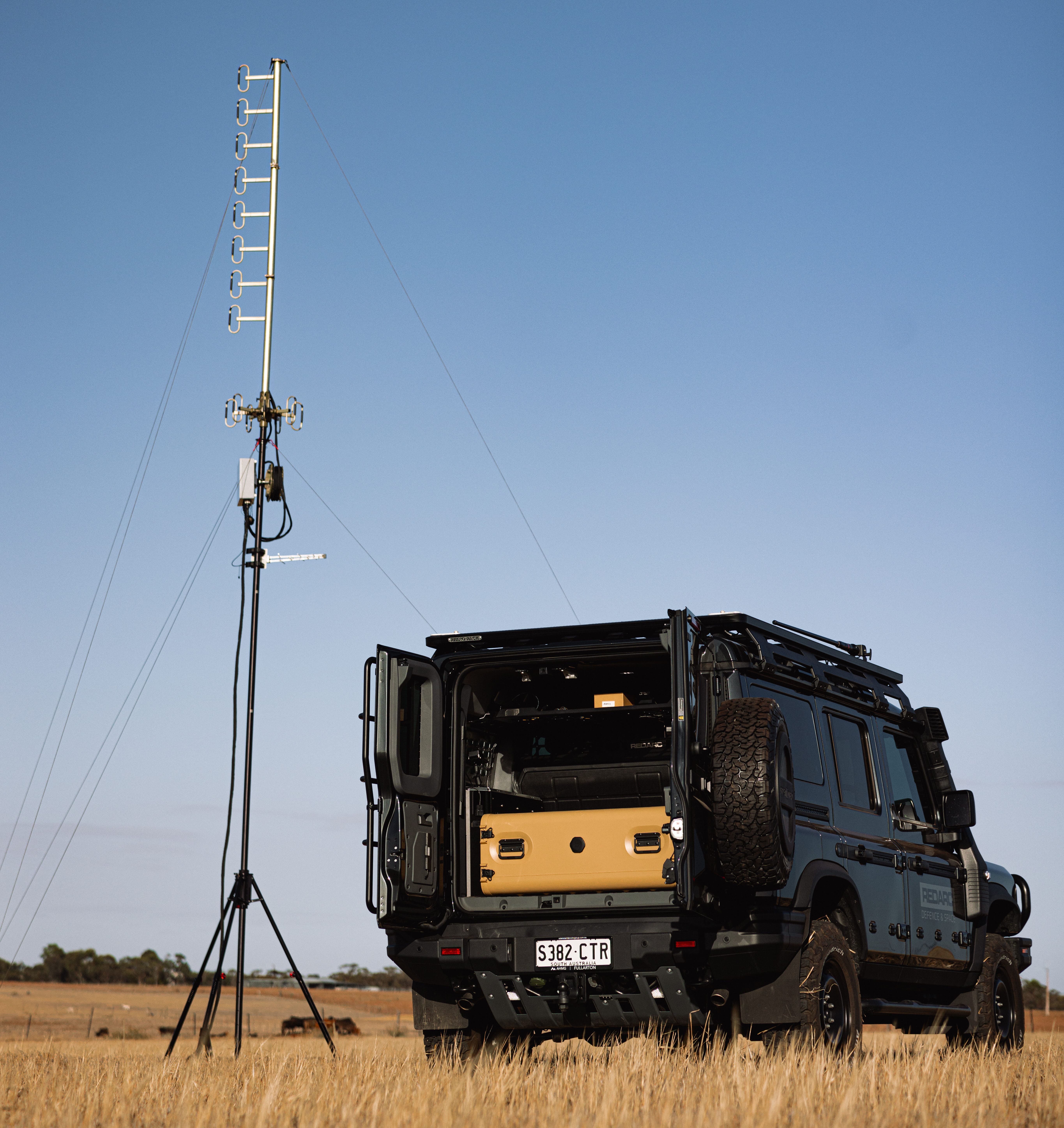
Silentium fills the gap that every RF-first vendor leaves: the drone with no radio link. Passive radar is also attractive to sites that cannot or will not radiate. It ranks below CEA only because the installed base is younger — the LAND 156 selection and AIR 6500 deliveries are the proof points to watch over the next two years.
05
Silentium Defence
TIER 1 · PASSIVE RADAR
Sees without emitting — the answer to dark drones
| 🏭 Industry | Defense and Space Manufacturing |
|---|---|
| 📍 Location | Adelaide, South Australia |
| 👥 Size | ~130 employees |
| 🌐 Website | silentiumdefence.com.au |
Silentium Defence, a 2017 DSTG spin-out, builds passive radar that exploits ambient broadcast energy instead of transmitting, so it detects drones that emit nothing and cannot be found by RF sensors or targeted by anti-radiation attack. The MAVERICK family spans the soldier-portable M8 (operational in under ten minutes), the vehicle-portable Excalibur, the fixed Fortress and the long-range OmniGuard, plus the commercial C-16 for critical infrastructure. The M8 was selected for LAND 156 in January 2026, and Silentium has delivered M8 sensors to Lockheed Martin Australia for AIR 6500. The company opened a US headquarters in North Carolina in August 2026.
Department 13 is the clearest example of a small Australian firm earning its place through integration rather than scale: its sensors sit inside the ADF’s chosen architecture, not beside it. Protocol manipulation is also a useful middle path for buyers who want mitigation without the legal exposure of brute-force jamming, though the same spectrum rules still apply to the transmit side.

06
Department 13
TIER 1 · RF DETECTION & PROTOCOL MANIPULATION
Canberra-built RF sensing inside the ADF’s integration team
| 🏭 Industry | Aviation & Aerospace |
|---|---|
| 📍 Location | Forrest, Australian Capital Territory |
| 👥 Size | 11-50 employees |
| 🌐 Website | department13.com |
Department 13 is a Canberra company that builds passive RF detection and non-kinetic mitigation; its operating business was sold to Australian owners in 2020 after the ASX-listed parent was delisted, and it now describes itself as 100% Australian-owned. Its current line is Scout for passive RF detection, Atlas for command and control, and Dart for mobile protocol-manipulation mitigation, plus the ADDN sensor network. The legacy MESMER brand has been superseded. Department 13 supplies RF sensors into the Leidos-led LAND 156 integration team alongside Acacia Systems, EOS, Echodyne and L3Harris, and its Dart system was used in the Army’s Exercise Southern Arrow 25 live-fire demonstration at Cultana.
Rohde & Schwarz belongs on any shortlist where spectrum fidelity matters — its detection and direction-finding performance is a benchmark, and the same instruments support certification and site survey work. The honest caveat is local depth: the counter-drone product is not Australian-developed, and the local entity’s role is support rather than sovereign manufacture.

07
Rohde & Schwarz Australia
TIER 2 · RF DETECTION & JAMMING (SUBSIDIARY)
The reference RF lab, selling ARDRONIS into Australia
| 🏭 Industry | Defense and Space Manufacturing |
|---|---|
| 📍 Location | Macquarie Park, New South Wales |
| 👥 Size | 51-200 employees |
| 🌐 Website | rohde-schwarz.com |
The Australian subsidiary of Germany’s Rohde & Schwarz has operated locally since 1981 and covers test and measurement, secure communications and spectrum monitoring alongside defence systems. Its counter-drone line is ARDRONIS: Detect for RF detection, Locate Compact for direction finding, and ARDRONIS Effect, a multi-band jammer that reached market launch in April 2025 at technology readiness level 9, plus ARDRONIS Wi-Fi for wireless-network drones. ARDRONIS Locate Compact was demonstrated at AVALON 2025. The product line is German-developed; the Australian entity provides integration, support and local engineering, and no Australian counter-drone contract award has been publicly confirmed.
HighCom shows how the Australian market now works: a local integrator wins the contract and a foreign specialist supplies the sensor. That model gives buyers a sovereign contracting and sustainment route without waiting for an Australian OEM. It ranks here on contract substance rather than product breadth — one large order does not yet make a product line.
08
HighCom Technology
TIER 2 · INTEGRATOR (MYDEFENCE)
The ADF’s newest counter-drone delivery route
| 🏭 Industry | Defense and Space Manufacturing |
|---|---|
| 📍 Location | Canberra, Australian Capital Territory |
| 👥 Size | SME |
| 🌐 Website | highcom.group |
HighCom Technology, a subsidiary of ASX-listed HighCom Limited (HCL), is a defence technology integrator that moved into counter-drone in 2026. In April it received a A$9.81 million (including GST; A$8.99 million excluding) counter-small-UAS order from Defence, following an ADF evaluation programme, with Danish firm MyDefence supplying the C-UAS technology and HighCom handling delivery, integration and support. It was the company’s first major counter-drone order and was scheduled for delivery by the end of June 2026. HighCom is also on the LAND 156 standing offer panel.
SYPAQ represents the low-cost interceptor school: rather than a missile, a cheap autonomous drone that rams or destroys the threat. That economics argument is the same one driving Ukrainian and US counter-swarm programmes, and the Mission Syracuse award gives it an ADF path. The system is still in development, so buyers should treat it as a future option rather than a fielded product.
09
SYPAQ Systems
TIER 2 · KINETIC INTERCEPTOR
Cheap interceptors for the one-way-attack threat
| 🏭 Industry | Defense and Space Manufacturing |
|---|---|
| 📍 Location | Melbourne, Victoria |
| 👥 Size | 51-200 employees |
| 🌐 Website | sypaq.com |
SYPAQ is an Australian autonomy and uncrewed-systems company best known for the Corvo precision payload delivery system, and it is now one of three firms funded under ASCA’s Mission Syracuse to build sovereign counter-drone effectors. In April 2026 it received A$10.4 million to develop Corvo Strike, a kinetic interceptor designed to track, target and destroy larger drones such as one-way-attack types. SYPAQ is also on the LAND 156 standing offer panel, and its funded work is intended to be integrated into the ADF’s LAND 156 control architecture.
Directed energy is the only effector whose cost per shot falls toward zero, which matters against swarms. AIM Defence is the Australian bet in that category, and the ADF has already bought Fractl systems before the Mission Syracuse award — this is a fielded product line being scaled, not a concept. The open question is weather: laser effectiveness in rain, dust and smoke is the reason most programmes keep a kinetic layer alongside it.
10
AIM Defence
TIER 2 · DIRECTED ENERGY
A laser that tracks a coin at 100 km/h
| 🏭 Industry | Defense and Space Manufacturing |
|---|---|
| 📍 Location | Melbourne, Victoria |
| 👥 Size | SME |
| 🌐 Website | aimdefence.com |
AIM Defence, founded in 2017, builds the Fractl family of high-energy fibre lasers for counter-drone work, with AI-enabled tracking and a cost per shot the company puts at around 90 cents. It runs the Southern Hemisphere’s largest indoor laser testing range at its Melbourne manufacturing site. Prior to Mission Syracuse the company had already won more than A$10 million of Australian Defence orders for Fractl systems, and it has sold into Canada and the United States. In April 2026 it received A$21.3 million under Mission Syracuse — the larger of the first two awards — to move Fractl from low-rate to mass production.
Every counter-drone programme needs something to shoot at, and Boresight turned that into a recurring-revenue business: its products are consumables, deliberately expended and reordered. For a buyer, it is the low-risk entry point into the Australian ecosystem — training and evaluation before procurement. It ranks mid-table because it enables counter-drone capability rather than delivering it.

11
Boresight
TIER 2 · C-UAS TRAINING TARGETS
The drones you are allowed to shoot down
| 🏭 Industry | Defense and Space Manufacturing |
|---|---|
| 📍 Location | Fyshwick, Australian Capital Territory |
| 👥 Size | SME (ASX: BST) |
| 🌐 Website | boresightuas.com |
Boresight designs and manufactures low-cost, attritable target drones used as realistic aerial threats in counter-drone training and live-fire evaluation, with a ground control system that supports swarming and enforces safety parameters. The product line includes the BQ-400 Raider, BQ-750, BS-350 and the BQ-300 FPV target in development. The company says it has sold more than 6,000 target drones to 15 militaries across 12 countries, and it delivered 300 drones to Defence under ASCA’s sovereign UAS challenge in 2025. Boresight listed on the ASX in June 2026 after an A$8 million IPO and reported A$6.38 million of FY2026 revenue.
EPE is the procurement-safe choice: an established, veteran-owned Australian business that already holds the defence supply-chain credentials and can carry a foreign product through certification, training and sustainment. Its value is integration and longevity rather than proprietary technology. Buyers who need a single accountable Australian contract for a mixed sensor-and-effector fit-out should start here.
12
EPE
TIER 2 · INTEGRATION & SUSTAINMENT
The veteran-owned integrator that has been doing this since 2014
| 🏭 Industry | Defense and Space Manufacturing |
|---|---|
| 📍 Location | Brisbane, Queensland |
| 👥 Size | SME |
| 🌐 Website | epequip.com |
EPE (Explosive Protective Equipment) is a Brisbane-based, veteran-owned SME founded in 1986 that supplies counter-IED, EOD, force-protection ECM and counter-drone systems to Defence, police and Commonwealth agencies, supported by training and through-life support. It began counter-drone work in 2014 with the G20 Brisbane threat assessment and was appointed Australasian distribution partner for Department 13’s MESMER system in 2016. EPE was named in the first A$16.9 million LAND 156 tranche in July 2025 and is on the 28-company standing offer panel as EPE Oceania. It has repeatedly ranked in the Australian Defence Magazine Top 20 SME contractors.
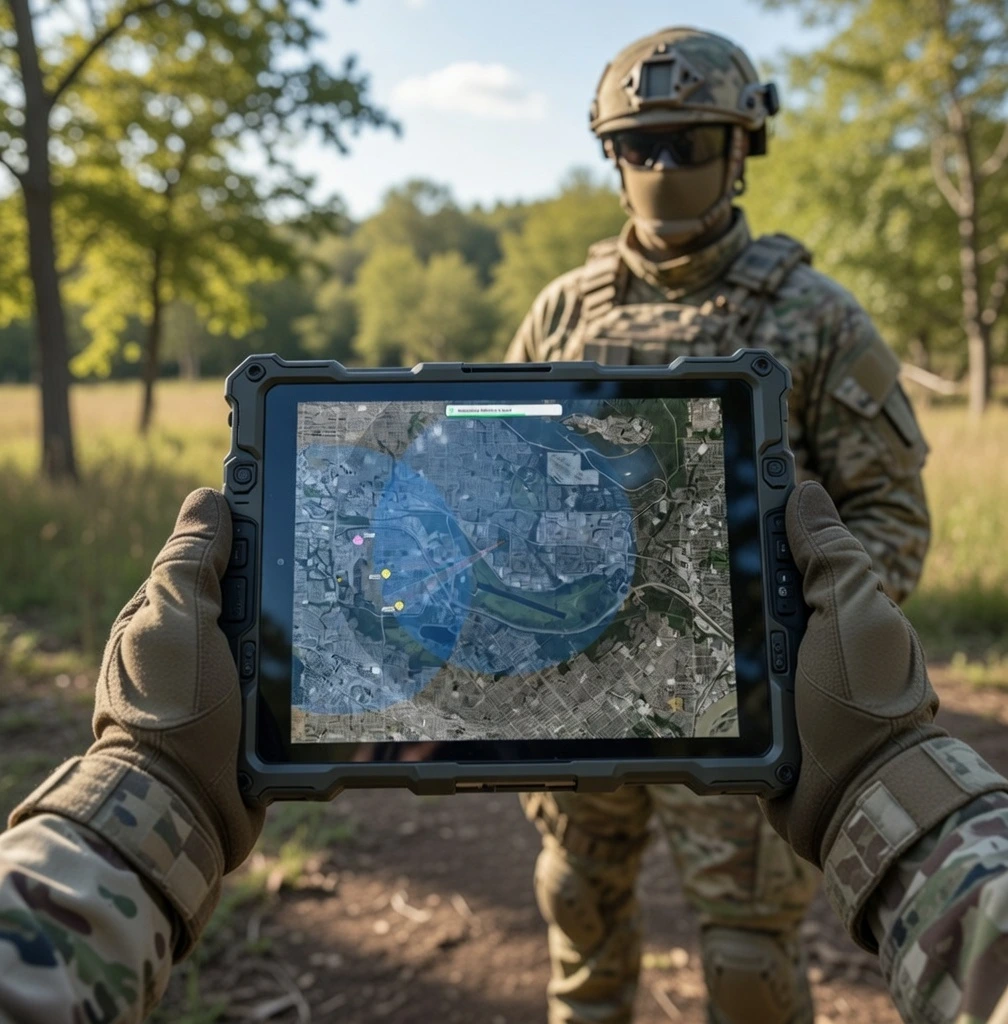
KeyOptions offers breadth: one vendor for detection, cuing and neutralisation, which suits smaller agencies that cannot manage four contracts. The Austral Shield trial gives it a recent, visible ADF use case. The trade-off is depth — a multi-sensor suite assembled from partner products is harder to certify than a single-purpose sensor, and buyers should ask for the underlying supplier list.
13
KeyOptions
TIER 2 · RF DETECTION & NEUTRALISATION
A broad C-UAV suite with ADF field trials behind it
| 🏭 Industry | Technology, Information and Internet |
|---|---|
| 📍 Location | Melbourne, Victoria |
| 👥 Size | SME |
| 🌐 Website | keyoptions.com |
KeyOptions is an Australian technology supplier whose C-UAV business centres on the SkyControl ecosystem — RF detection, electro-optical and infrared sensors, radar, jamming, spoofing and AI-assisted tracking — alongside SkyGuard neutralisation, the Spectralint command system and the E-Ceptor electrostatic effector. The company won a A$2 million counter-drone equipment and training contract in August 2025 and roughly A$4 million of software and services under LAND 156, and it sits on the 28-company standing offer panel. Its SkyControl system was trialled at Exercise Austral Shield 2026 at Weipa, where counter-drone technology was pushed to section level for the first time.
Command and control is where counter-drone programmes usually fail — sensors from five vendors, no common picture, operators making decisions in three different interfaces. Acacia’s place in the ADF’s chosen integration team makes it the Australian C2 name to know, and it is the natural integration point for a buyer assembling a multi-vendor site.

14
Acacia Systems
TIER 2 · C2 SOFTWARE
The command layer the ADF’s counter-drone stack runs on
| 🏭 Industry | Defense and Space Manufacturing |
|---|---|
| 📍 Location | Hendon, South Australia |
| 👥 Size | SME |
| 🌐 Website | acaciasystems.com.au |
Acacia Systems is a 30-year-old Adelaide defence software house whose Cortex mission-management system was selected as the sovereign command-and-control layer of the ADF’s counter-drone program, inside the Leidos-led LAND 156 integration team. Cortex fuses RF sensors, radar and electro-optical data and cues effectors; it was exercised in the Army’s Southern Arrow 25 live-fire demonstration at Cultana in December 2025, where kinetic and non-kinetic defeats of Group 1 and Group 2 drones ran through a single command picture. Acacia works alongside EOS, Department 13, Echodyne and L3Harris under Leidos’s A$45.9 million systems-integration contract.
DEWC Services is the specialist you bring in when the problem is electromagnetic rather than physical: spectrum planning, ESM sensor design, countermeasure validation. It does not sell a counter-drone box, so it ranks below the product suppliers — but on a complex site its test and validation work is what turns a vendor claim into a certified capability.
15
DEWC Services
TIER 2 · ELECTRONIC WARFARE SERVICES
Veteran-owned EW depth, not a product catalogue
| 🏭 Industry | Defense and Space Manufacturing |
|---|---|
| 📍 Location | Mawson Lakes, South Australia |
| 👥 Size | 80-100 employees |
| 🌐 Website | dewc.com |
DEWC Services is a veteran-owned Adelaide electronic-warfare consultancy that provides C4ISREW engineering, ESM sensor development, and RF and electro-optical countermeasure validation for Defence, including work with the Joint Electronic Warfare Operational Support Unit, the Joint Systems Test and Validation Unit and DSTG. It is on the LAND 156 standing offer panel and holds a A$4.65 million RAAF radio-frequency specialist support contract running to May 2027. It is a separate company from DEWC Systems, which rebranded as Asension and ceased operations in 2024; Asension’s IP was acquired by REDARC Defence & Space.
Baird is on the list because it addresses the problem most RF-first vendors cannot: a drone with no radio link. The fibre-optic FPV threat is real and growing in Ukraine and is beginning to shape Australian requirements. The caution is evidence — the product claims are company-sourced, with no publicly confirmed contract or independent trial, so treat Baird as one to watch and validate rather than a proven supplier.
16
Baird Technology
TIER 3 · EMERGING KINETIC INTERCEPT
Built for the fibre-optic drone that ignores jamming
| 🏭 Industry | Defense and Space Manufacturing |
|---|---|
| 📍 Location | Caloundra West, Queensland |
| 👥 Size | Micro-SME |
| 🌐 Website | bairdtechnology.com |
Baird Technology is a small Australian defence engineering company developing autonomous systems for contested environments. Its product set is aimed squarely at the jamming-resistant end of the threat: TAIPAN is an autonomous counter-UAS interceptor that physically engages aerial threats without relying on RF jamming, FIBERHOUND is a passive detection system for fibre-optic FPV drones that locates operators and cables rather than radio emissions, WIDOWSWARM is a distributed ISR and targeting swarm, and SENTINEL-M is an unmanned ground vehicle for casualty evacuation and logistics. The company says it engineers for deployability and retains full IP ownership.
Remote Sense is the smallest company here with an end-to-end story — detection cueing, interceptor, command layer — which makes it interesting for buyers who want a low-cost, distributed architecture rather than a single fixed site system. It ranks low because the evidence base is thin: no public ADF contract, and the products are early. Ask for trial data before shortlisting.
17
Remote Sense
TIER 3 · AUTONOMY & INTERCEPT
Federated command and control for mixed air, land and sea fleets
| 🏭 Industry | Aviation and Aerospace Component Manufacturing |
|---|---|
| 📍 Location | Brisbane, Queensland |
| 👥 Size | Micro-SME |
| 🌐 Website | remotesense.com.au |
Remote Sense builds autonomy and sensing systems for defence and difficult environments. Its counter-drone offer centres on V-Forge, a federated, mesh-networked command-and-control platform in which every node can act as a command post, alongside DART interceptor drones, the CLAVE autonomy stack, Dronescape airspace management and a simulation suite. The company positions the stack for precision, speed and cost-effectiveness, and for interoperability with third-party systems rather than as a closed product family.
Hydrix is not a counter-drone brand and should not be bought from as one. It is the engineering partner a programme uses to turn a sensor concept into a producible, certifiable subsystem — which is exactly the bottleneck for small Australian firms with good ideas. Include it when the gap is design assurance, not capability.
18
Hydrix
TIER 3 · ENGINEERING & SUBSYSTEMS
The design house behind other people’s counter-drone hardware
| 🏭 Industry | Design Services |
|---|---|
| 📍 Location | Melbourne, Victoria |
| 👥 Size | SME (ASX: HYD) |
| 🌐 Website | hydrix.com |
Hydrix (ASX: HYD) is an Australian engineering and product-development company that works on regulated, safety-critical systems across medical, industrial and defence markets, with a dedicated UAS and C-UAS practice. It established a defence subsidiary, Hydrix Defence, in 2025 to acquire, license and develop sensing, autonomy, electronic-warfare, navigation and counter-UAS technology. In May 2026 it won a A$1.2 million contract with NIOA Group to develop a counter-UAS payload subsystem, and it holds work with Phasor Innovation on quantum sensing and navigation for GPS-denied environments.
Simbiant is included because the My Sky interceptor concept — a man-portable, fire-and-forget counter-drone drone — did not disappear when the spin-out did; the work returned to the parent. What remains is an engineering capability rather than a catalogue product, so buyers should engage Simbiant for RF signal work and rapid prototyping, not for an off-the-shelf interceptor.
19
Simbiant
TIER 3 · EW ENGINEERING
Where the My Sky interceptor work ended up
| 🏭 Industry | Defense and Space Manufacturing |
|---|---|
| 📍 Location | Glenelg, South Australia |
| 👥 Size | 11-50 employees |
| 🌐 Website | simbiant.com.au |
Simbiant is an Adelaide electronic-warfare, modelling-and-simulation and embedded-systems engineering house that has worked on NULKA EW support and radar threat modelling. Its closest counter-drone line is a Defence Innovation Hub contract for AI-based RF generation, detection, characterisation and classification, and it holds a DSTG research services contract worth A$769,186 running from August 2025 to August 2026. Simbiant is the parent from which My Sky Technologies spun out in 2017; the counter-UAV developments were subsequently transferred back to Simbiant, and My Sky no longer trades under its own domain.
Nova is the independent party in a market full of vendors: it assesses the site, defines the requirement and tests the result. That makes it valuable to a buyer who does not yet know what to buy, and useful as the assurance layer over a multi-vendor installation. It ranks last because it sells no counter-drone product of its own.
20
Nova Systems
TIER 3 · TEST, EVALUATION & ADVISORY
The independent test authority behind the procurement
| 🏭 Industry | Defense and Space Manufacturing |
|---|---|
| 📍 Location | Adelaide, South Australia |
| 👥 Size | ~1,000 employees |
| 🌐 Website | novasystems.com |
Nova Systems describes itself as Australia’s largest privately owned defence company, with about 1,000 staff across 18 offices. It was selected as a Category 1 partner on the LAND 156 counter-UAS standing offer panel in January 2026, tasked with site assessments, drone-threat assessment, solution design and risk advice, and it provides test-and-evaluation services to the ADF through a dedicated T&E Centre of Excellence. It also runs unmanned-systems test and evaluation course work.
Start with the threat model, not the catalogue. A defence site facing Group 1 drones needs layered detection — passive RF from Department 13 or Silentium Defence’s MAVERICK radar, cued into a command layer such as Acacia Systems’ Cortex or Anduril’s Lattice — before it needs an effector. A prison or airport needs detection and reporting first, because the legal ceiling on civil mitigation is low. A deployed unit facing one-way-attack drones needs a kinetic layer, which in Australia now means EOS’s R400 Slinger, SYPAQ’s Corvo Strike interceptor or AIM Defence’s Fractl laser; a site facing fibre-optic drones that ignore RF jamming needs a non-RF kill chain, which is where Baird Technology’s TAIPAN and FIBERHOUND sit.
The legal constraint binds before the technical one. Civilian jamming, GPS spoofing and kinetic capture are prohibited: the Radiocommunications (Jamming Equipment) Permanent Ban 2023 covers GPS, mobile, Wi-Fi and drone jammers, and banned equipment is also a prohibited import. Police operate under a targeted ACMA exemption, and since January 2026 Defence has statutory powers to detect, disable, seize or destroy uncrewed systems in protected defence areas under the Defence Amendment (Counter-UXS Measures) Regulations 2025. For a private operator the practical sequence is detect, record, report and escalate to police — the technical detail is covered in our guides to RF drone detection, choosing a detection radar and prison air defence.
Sovereign content is the third filter. Australian Industry Capability plans apply above A$20 million, and counter-drone maps to Sovereign Defence Industrial Priorities 5 (autonomous systems) and 6 (battlespace awareness), so a foreign-owned product sold through an Australian integrator often clears procurement faster than the same product sold direct. Buyers comparing other markets should read our UK, India and Israel lists; the shortlist logic is the same, the suppliers are not.
There is no published national dataset. Department of Defence figures reported by The Daily Telegraph put incursions over ADF bases at 21 in FY2022–23, 60 in FY2023–24 and 147 in FY2024–25 — roughly a sixfold rise in two reporting cycles — but no primary Defence table or annual-report page carrying that series is public, so treat it as reported rather than official. The closest official aviation figure is the ATSB’s record of 939 “encounter with RPA” occurrences since 2015 (CASA, 2024). Airservices Australia has detection sensors at all 29 civil controlled airports but does not publish sighting counts, and prison drone drops are documented only case by case.
The supply base splits into four layers. Detection: DroneShield, Department 13 and Rohde & Schwarz Australia in RF, Silentium Defence in passive radar, CEA Technologies in air-defence radar. Command and control: Acacia Systems’ Cortex and Anduril Australia’s Lattice. Effectors: EOS’s R400 Slinger and Apollo laser, AIM Defence’s Fractl, SYPAQ’s Corvo Strike, DroneShield’s DroneGun. Integration and sustainment: EPE, HighCom Technology, KeyOptions, Hydrix, Nova Systems. The LAND 156 standing offer panel announced in January 2026 lists 28 pre-qualified firms across those layers.
No. Jamming is banned for everyone outside a narrow exempt class under the Radiocommunications (Jamming Equipment) Permanent Ban 2023, which covers GPS/RNSS, mobile, Wi-Fi and drone jammers and makes banned equipment a prohibited import; penalties run to 1,000 penalty units and two years’ imprisonment, rising to 5,000 units or five years where significant interference is caused. Police use drone-disruption devices under a targeted ACMA exemption instrument, and Defence gained statutory counter-UXS powers in January 2026. Private site operators can detect, record and report freely, but cannot transmit or capture. Our guide to no-fly zones and enforcement covers the airspace side.
The most defensible number is government spending: up to A$7 billion over ten years for counter-drone, inside A$22 billion for drones and autonomy, on top of the original A$1.3 billion LAND 156 line — the two are a funding envelope and a delivery program, not additive figures. Commercial estimates sit far lower and depend heavily on scope: MarketsandMarkets sizes Australia’s counter-UAS systems market at USD 101.1 million in 2025 rising to USD 265.3 million by 2030, a 21.3% CAGR, covering detection, C2 and mitigation across defence, government and commercial buyers. Treat any single figure as scope-dependent and check what it includes.
LAND 156 is the Australian Defence Force’s counter-small-UAS program, backed by A$1.3 billion over ten years and run on a rolling acquisition model called ICARUS that refreshes sensors, effectors and command systems every few months instead of once a generation. The first wave, in July 2025, awarded A$16.9 million to 11 vendors for at least 120 threat detectors and defeat systems; a A$38.7 million follow-on in August 2025 added stand-alone effectors. Leidos Australia is the systems integration partner, leading a team that includes Acacia Systems, EOS, Department 13, Echodyne and L3Harris. The program has run integrated live-fire demonstrations at Exercise Southern Arrow 25 and section-level training at Exercise Austral Shield 2026, and carries an interoperability requirement so systems can support Queensland authorities at Brisbane 2032.


